José Manuel Almuzara: The Faith of Antoni Gaudí Inspired Conversions and Heroic Renunciations
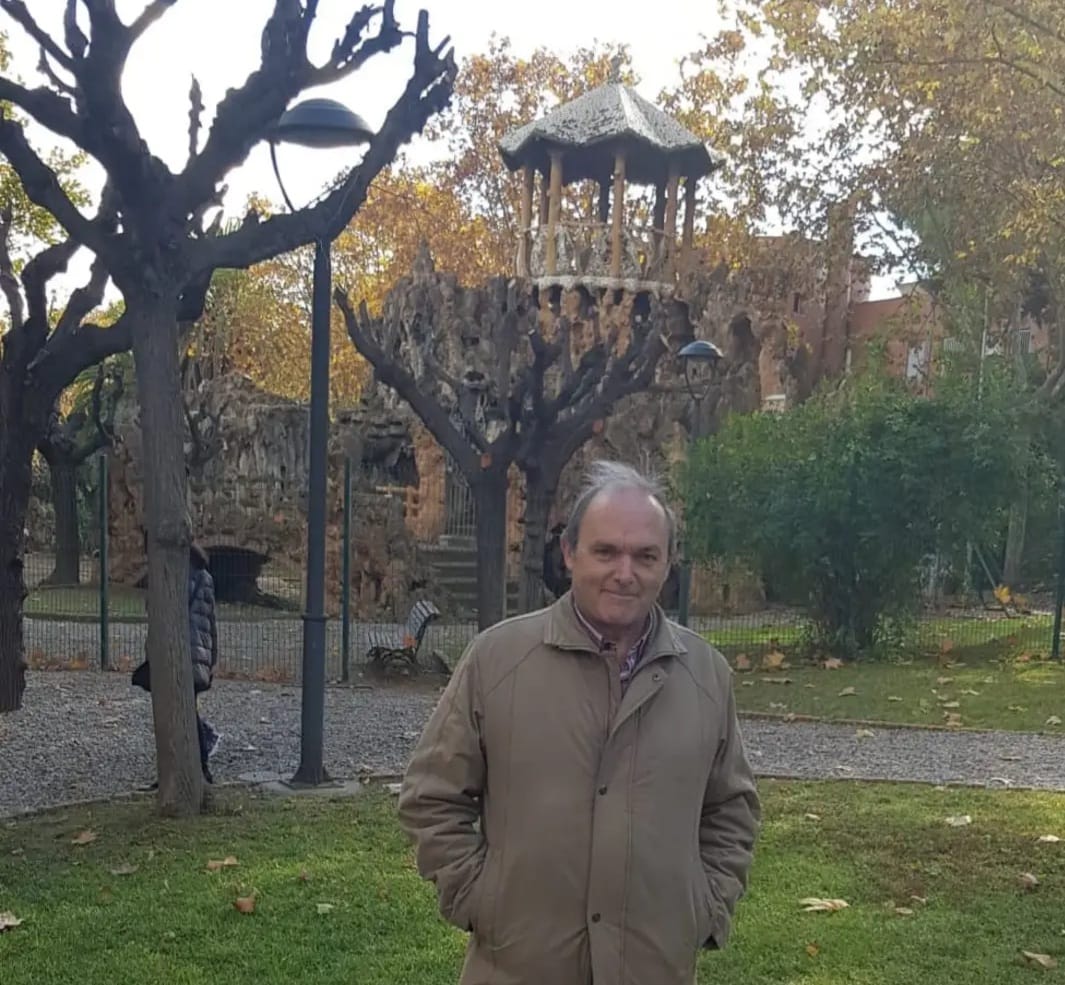
“Faith transformed the passionate, impetuous, irascible young man into a serene, balanced, exemplary man who only exceptionally had outbursts of bad temper; he radiated such a beneficial influence that it inspired conversions and even heroic renunciations in those who lived alongside him.”
The president of the Association for the Beatification of Gaudí, José Manuel Almuzara, addresses the current status of the Servant of God’s cause for canonization. He emphasizes how the architect’s profound experience of the Catholic faith transformed his character and inspired radical changes in his environment. Almuzara defends Gaudí’s orthodoxy against historical slanders.
José Manuel Almuzara Pérez, architect and president of the Association for the Beatification of Antoni Gaudí since 1992, has given an interview to update information regarding the canonization process. Almuzara, who knew direct disciples of Gaudí, has dedicated his life to promoting the spiritual and artistic figure of the brilliant architect. The Association was established following the inspiration of Mossèn Ignasi Segarra, who wondered why a Christian Catalan who lived the virtues to a heroic degree had not been proposed for beatification. Since its founding, the initiative has elicited an emotional response worldwide, highlighting the reputation of being a ‘good person’ that Gaudí still maintains among the populace.
Numerous testimonies attest to Gaudí’s profound faith and mysticism, a man who strove to live the Christian virtues. The architect Joan Bergós i Massó, a disciple of Gaudí, testified that his faith was the engine of a deep personal transformation. This faith converted his impetuous character into a serene and exemplary one. His influence was such that he radiated a beneficial inspiration that prompted conversions and heroic renunciations among those who worked alongside him. This confirms that his supremely high artistic inspiration crowned an intense, sustained, methodical, and disciplined work ethic.
“Creation continues, and the Creator makes use of His creatures. Those who investigate the laws of nature to shape new works collaborate with the Creator.”
As an architect, José Manuel Almuzara particularly emphasizes Gaudí’s love for work well done and in collaboration with all his technicians and artisans. Gaudí asserted that work is the fruit of collaboration, which can only be based on love and on knowing how to utilize the preeminent quality of each worker, because ‘no one is useless.’ On a spiritual level, he intensely cultivated the theological virtues and daily frequented Mass, Communion, and the recitation of the Rosary. Furthermore, he understood sacrifice as a necessity for things to succeed, defining it as ‘the diminution of the self without compensation.’
Currently, the cause for canonization is in the phase of the *positio super vita, virtutibus et fama sanctitatis* (the volume compiling all the evidentiary documentation regarding his life, virtues, and writings). The process seeks to demonstrate the heroic exercise of the virtues so that the Servant of God may be called ‘Venerable.’ Furthermore, Almuzara takes the opportunity to refute the slanders that have circulated about Gaudí, which accused him of being a Templar, a Freemason, or an alchemist. He quotes Dr. Joan Bassegoda Nonell to affirm that the architect soon demonstrated a Catholic sentiment beyond all doubt, collaborating with bishops and filling his works with religious symbols.
“Beauty is man’s great necessity; it is the root from which the trunk of our peace and the fruits of our hope sprout.”
The future canonization of Antoni Gaudí, whom Benedict XVI described as a ‘brilliant architect and consistent Christian,’ would be a great benefit for the universal Church. His life and work, internationally admired, attract and impact people, helping to overcome the split between human consciousness and Christian conscience. Gaudí used his art as an external manifestation of his profound believing soul, filling his plastic forms with symbolic content that expresses his intimate relationship with God. His work teaches that ‘beauty is also revealing of God’ and that faith is the light that allows one to judge all things rightly.
📰 Artículo original: https://somatemps.me/2020/10/07/entrevista-jose-manuel-almuz…